

Economic Development
“I believe that, as long as there is plenty, poverty is evil.” – Robert Kennedy
“As long as poverty, injustice and gross inequality exist in the world, none of us can truly exist.” – Nelson Mandela
“Extreme poverty anywhere is a threat to human security everywhere.” – Kofi Annan
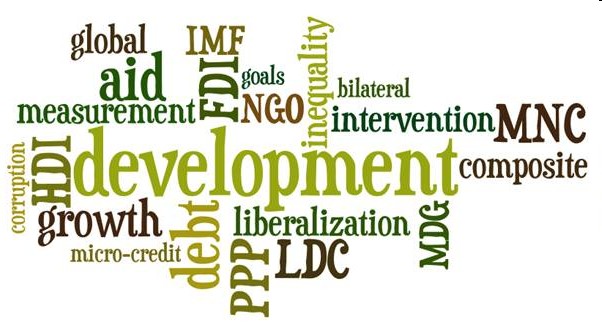
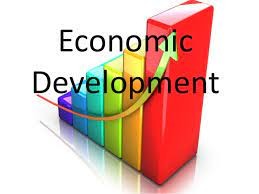
Global economic development is far from evenly distributed. Unfortunately, this leaves a sizeable portion of the world's population struggling to escape absolute poverty. Economics students (especially IB candidates) need to appreciate and understand the role of economic theory and ideas in helping formulate policies designed to help break the vicious cycle of poverty unique to less developed countries (LDCs). This section of the web site offers useful links and case studies to help students develop a better understanding and perspective of the economic problems that hinder development in the LDCs and ultimately prevent improved living standards and human welfare.
For a quick look at the state of health and incomes across the globe, check this out!
International Agencies
International organizations, such as the United Nations, exist to promote human development, peace and security. Others, such as the World Bank and IMF, are mandated to provide funding for development projects and financial stabilization packages to mitigate balance of payments problems and exchange rate instability.
Multinational Corporations
A multinational corporation (MNC) operates in many different countries with the head office usually being in a more developed country such as the US, Britain or Japan. Whether MNCs benefit or harm LDC economies remains a highly controversial area.
Income Distribution (Gini Coeficient)
"The Gini coefficient, also called the Gini index or Gini ratio, is the most commonly used measure of income distribution — simply put, the higher the Gini coefficient, the greater the gap between the incomes of a country's richest and poorest people. A country's Gini coefficient is important because it helps identify high levels of income inequality, which can have several undesirable political and economic impacts. These include slower GDP growth, reduced income mobility, greater household debt, political polarization, and higher poverty rates. " (World Poulation Review)
Non-Governmental Organizations (NGOs)
Non-governmental organizations have emerged in response to concerns over globalization, international trade, the environment and human development. The World Bank defines NGOs as "private organizations that pursue activities to relieve suffering, promote the interests of the poor, protect the environment, provide basic social services, or undertake community development".
(Operational Directive 14.70).
Fair Trade organizations
These organizations have emerged to support the growth and development of LDC economies by encouraging fair exchanges of goods (i.e. agricultural goods). Third World farmers have benefit from this by cutting out middlemen so that they receive substantially more while offering competitive products (i.e. coffee) in global markets.
Micro-credit Schemes
Micro-credit schemes allow the poor to borrow the financial capital needed where private/commercial banks have failed to fill the savings gap. Sometimes, the lack of a well established banking system also creates the need for 'micro-loans'.
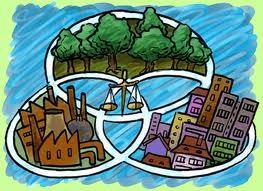
Sustainable Development
Sustainable development is development that meets the needs of the present without compromising the ability
of future generations to meet their own needs. (World Commission on Economic Development, 1987)
Sustainable Africa - Sustainable development in Africa
Aid
Aid assistance can be bi-lateral (donor to recipient) or multi-lateral (several donors to recipient). It can be official or from private sources as well. During the Cold War most aid was politically motivated, while today tied aid exists which can undermine the effectiveness of the aid.
Centre for Global Development - wide variety of data and issues relating to development initiatives
Foreign Aid for Development Assistance - analysis of aid and its impact on LDCs via MDC policies
All Africa.com - Aid and Assistance in Africa



Student Oral Presentations: Economic Development Indices & Strategies
Below is a review of the different indicators of human development and strategies for overcoming poverty and under-development in the less developed world. These notes have been prepared by HL economics students in Mr. Messere's class Year II class.
--- PENDING ---
